PharmaFlow
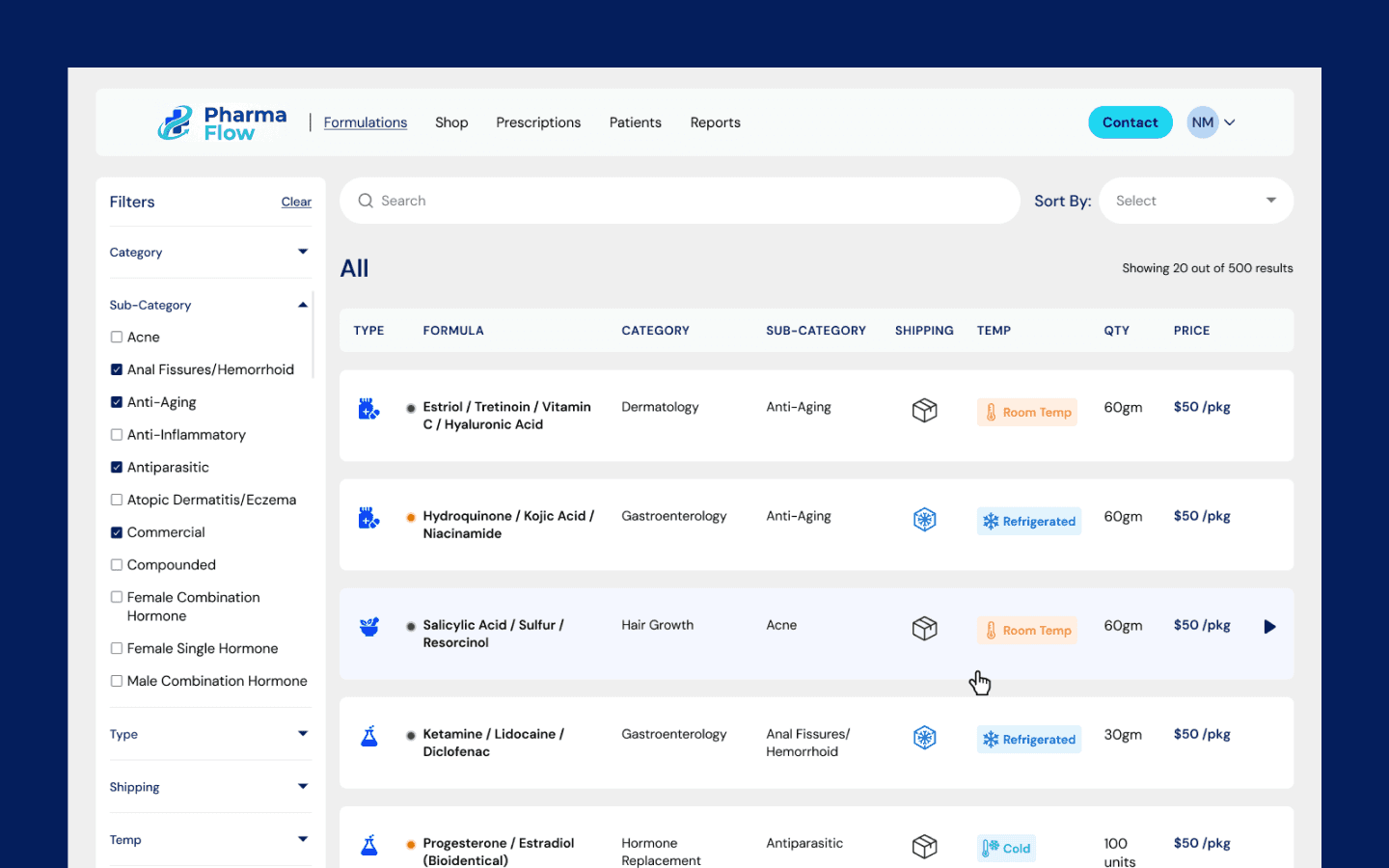
The data-driven SaaS catalog improved information discovery through structured layouts, intuitive filtering, and a clear visual hierarchy.

Project Overview
PharmaFlow is a B2B SaaS platform designed to streamline the discovery, ordering, and management of compounded medications for healthcare providers. The platform transforms fragmented, manual workflows into a centralized self-service experience, enabling doctors and pharmacists to quickly find formulations, verify availability, place orders, and track order status in real time.
My Role
I led the UI and interaction design for the platform, supported by secondary research into pharmaceutical ordering workflows and existing B2B solutions. My focus was on creating intuitive interfaces that simplified formulation discovery, ordering, and order tracking while aligning with business requirements.
Challenge
Healthcare providers relied on static formulation lists, manual availability checks, and offline ordering processes. Finding relevant formulations was time-consuming, order tracking lacked transparency, and frequent communication between providers and suppliers created operational inefficiencies. The goal was to digitize these workflows and create a self-service platform that simplified formulation discovery and ordering.
Process
I started by conducting stakeholder discussions and leveraging existing research to understand the current workflow and business challenges. Through secondary research and workflow analysis, I identified key pain points across formulation discovery, availability verification, ordering, and order tracking. Based on these insights, I defined user personas, mapped critical user journeys, and structured the platform around the primary tasks of doctors and pharmacists.
Key Design Decisions
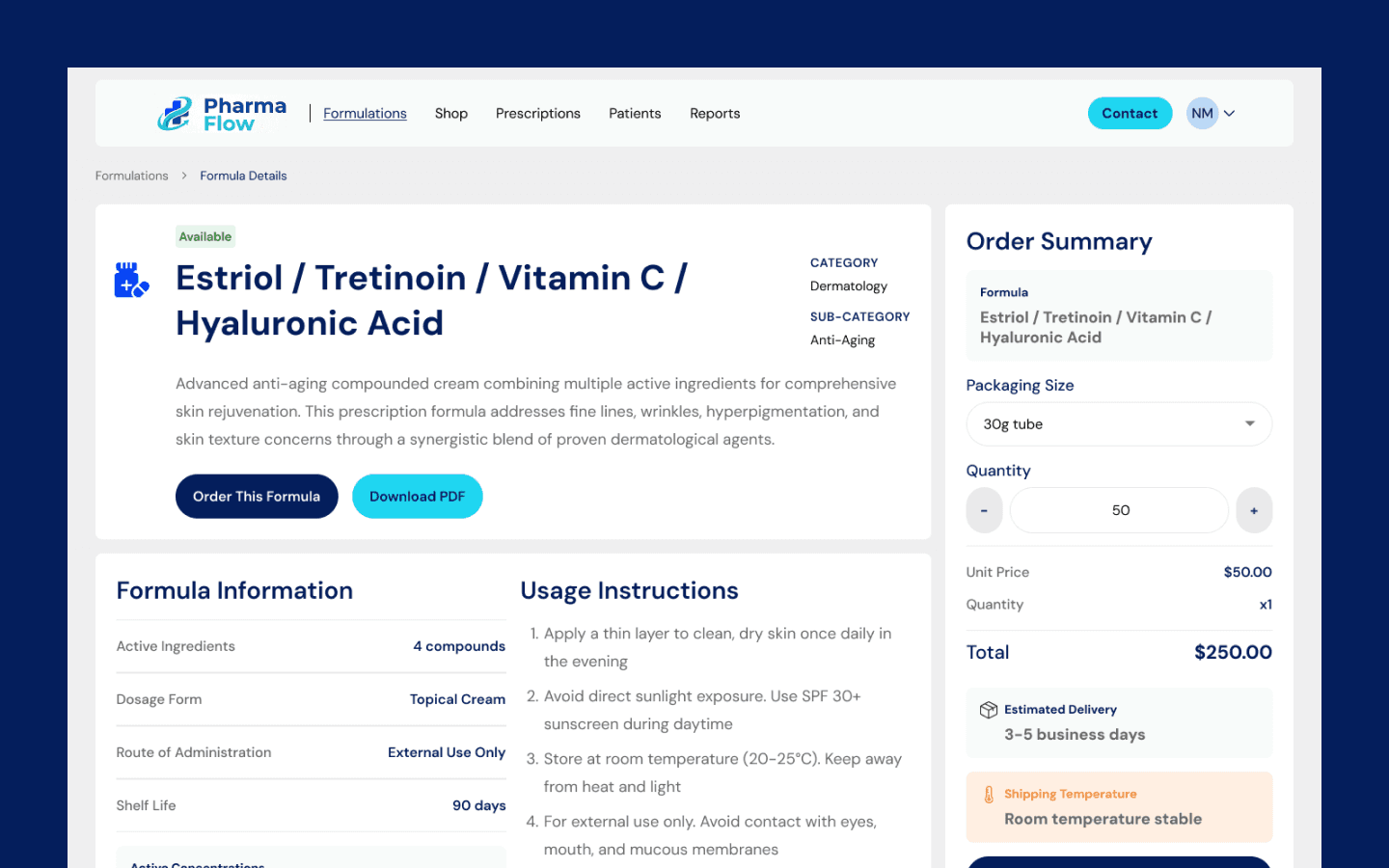
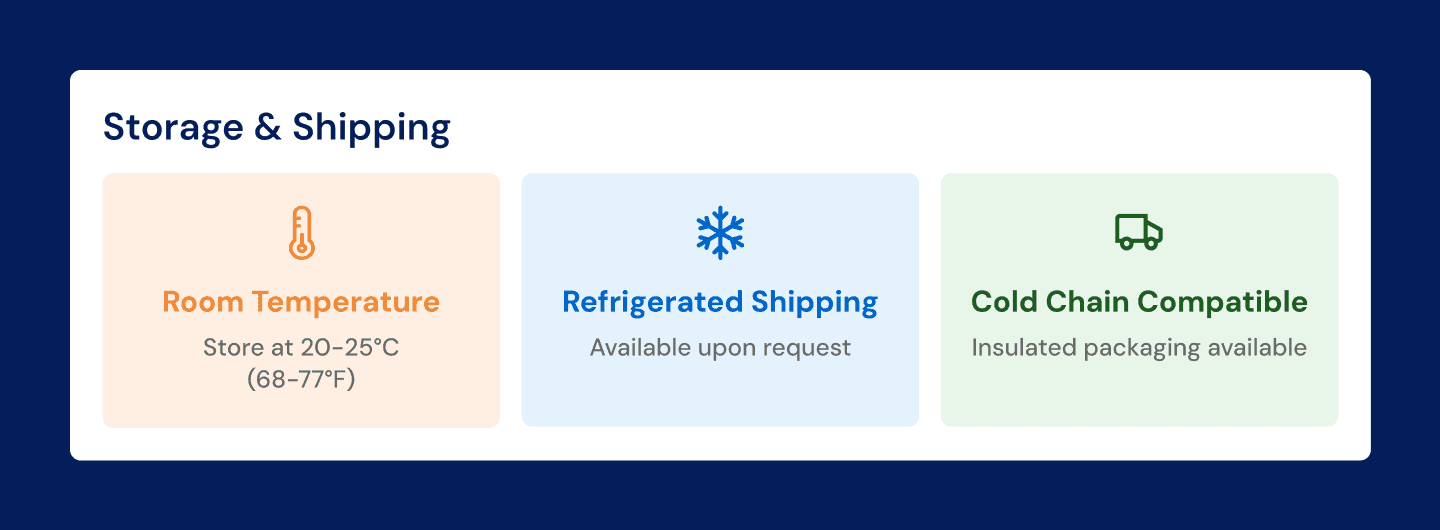
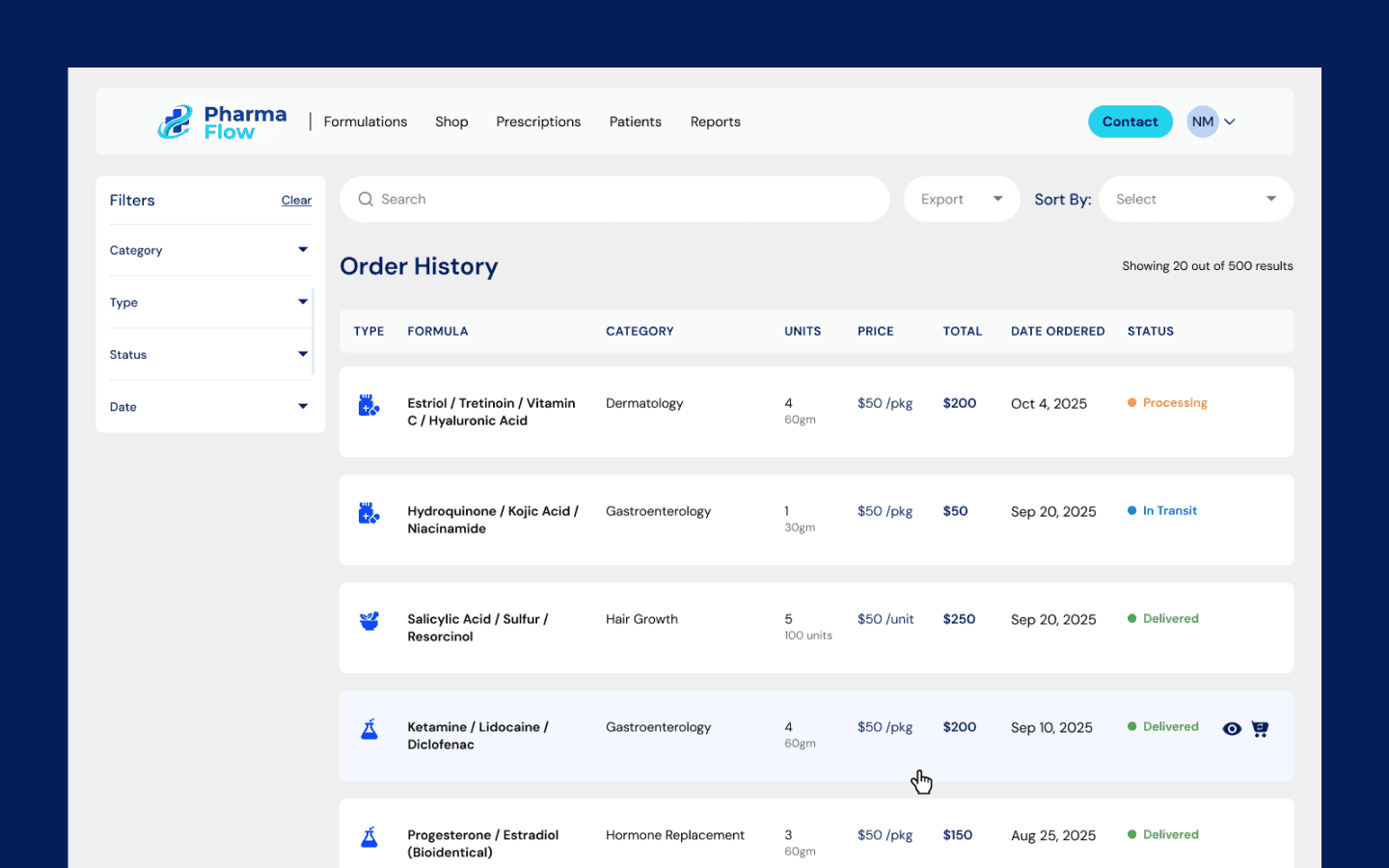
To improve formulation discovery, I designed a searchable catalog with advanced filtering and categorization, allowing users to quickly narrow down relevant options. Detailed formulation pages were introduced to consolidate product information, storage requirements, and ordering actions into a single view. Real-time availability indicators and shipping requirements were surfaced directly within the workflow to reduce manual follow-ups. An order history module was added to provide visibility into order status and support ongoing order management.
Outcome
The final solution transformed a fragmented manual process into a centralized digital workflow. Users can now discover formulations, verify availability, place orders, and track their purchases through a single platform. The redesigned experience reduces dependency on manual communication, improves operational efficiency, and provides greater transparency throughout the ordering journey.